Gratitude Conquers Discouragement

The devotional book Springs in the Valley by Mrs. Charles E. Cowman has a very interesting story related to the topic of discouragement. The story tells of a man who found a barn where Satan kept his seeds ready to be sown in the human heart. He found that the seeds of discouragement were more numerous than the others and he learned that those seeds could be made to grow almost anywhere. However, when Satan was questioned, he reluctantly admitted that there is one place in which he cannot get then to thrive. When the man asked where that would be, Satan replied that it was in the heart of a grateful person.

“In everything give thanks; for this is the will of God in Christ Jesus for you.” (1 Thessalonians 5:18)

“The person who has stopped being thankful has fallen asleep in life.”–Robert Louis Stevenson

For Everything There Is A Season

“To everything there is a season, and a time to every purpose under the heaven; a time to be born, and a time to die; a time to plant, and a time to pluck up that which is planted; a time to kill, and a time to heal; a time to break down, and a time to build up; a time to weep, and a time to laugh; a time to mourn, and a time to dance; a time to cast away stones, and a time to gather stones together; a time to embrace, and a time to refrain from embracing; a time to get, and a time to lose; a time to keep, and a time to cast away; a time to rend, and a time to sew; a time to keep silence, and a time to speak; a time to love, and a time to hate; a time of war, and a time of peace.”  Ecclesiastes 3:1-8

Many of us right now are in a season of waiting and trusting God in the unusual circumstances of this year. For me, ironically, this year has been passing way too quickly, and way too slowly at the same time. While some days seem to have dragged on, the months have been going too fast.

Under normal circumstances, we would have taken a few trips, visited family and friends, and enjoyed the different seasons more fully. Although Florida’s seasons aren’t very different, we usually get to experience spring, summer, fall, or winter up north while visiting family.

Since I had a lot of time to think, I started remembering some of the special things that I liked about the different seasons while growing up in a northern state. This time I decided that fall (autumn) was my favorite season.

Autumn has such wonderful sights, smells, and sounds, as well as some great memories for me (outside of often getting a throat or chest cold as the weather was changing). So what are some of the things that I have enjoyed about the fall season up north?

Of course, the brilliant colors of the leaves (golds, browns, oranges, red, and rust-colors) especially the maple tree leaves as the weather grew colder

The flavor of fresh pure maple syrup (that wasn’t very expensive up north)

One of my favorite fall activities was to rake up big piles of leaves as they fell off the trees, climb the trees, and then jump into the leaf piles. I liked to feel and hear the rustling of the leaves.

I was one of those unusual kids who really liked school a lot, and I really enjoyed getting new school supplies, a pair of shoes, and a few new outfits for school each year. I also enjoyed the times that we were assigned creating a leaf project for science class. (Perhaps that is why I chose teaching as a career)

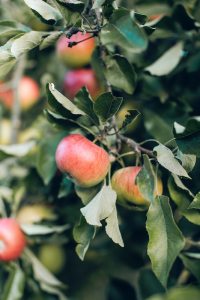
Apple season- fresh crisp apples, apple cider (hot or cold), apple pie, and fall spices

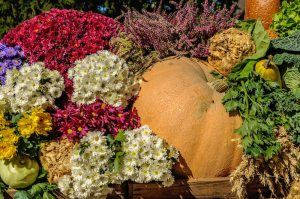
Harvest time- especially fresh corn on the cob and pumpkins

Clear night skies with so many visible stars and full harvest moons

Warm days and cool nights to enjoy hot chocolate or herbal teas (with an occasional visit from Jack Frost)

Fireplaces and wood stoves on cold nights

Corn Mazes and fall festivals, and the beginning of football season

Birthdays (mine, my sister’s, my mom’s are all autumn birthdays)

My favorite Holiday- Thanksgiving (especially because of the big family reunions with aunts, uncles, cousins, etc. that we had every year while Grandpa was still living), and some of my favorite foods (pumpkin pie, nut breads, stuffing, cranberry sauce, and of course, turkey)

Other holidays like Labor Day (last day for our family picnic before school began), Grandparents Day, Columbus Day (I loved all the school projects), Veterans Day

So what is your favorite season, and why?

The Value of Godly Grandparents

September is the month when we celebrate National Grandparents Day. This is a blog to honor grandparents.

“A life thoroughly committed to Christ, lived and tested over time, seasoned with experience and humility, is more powerful than most people ever imagine. People who have a heritage of godly grandparents carry this influence in their lives sometimes without recognizing its source.”
Jay Kesler

It seems that there are more and more broken and dysfunctional homes these days. When parents are too busy, or if they are behaving selfishly and irresponsibly, the grandparents become very important in the lives of their grandchildren. They often become the legal guardians of their grandchildren to protect them from abuse and neglect.

My husband’s grandmother was the most influential person in his life, and for myself, my grandfather that lived with us for the last 15 years of his life was very important to me. Although he was very old, and we didn’t have a lot of meaningful talks, he was the only older male influence I had growing up (since I didn’t have a father). My mom had to work to support all of us, so he was there every day when we came home from school, and gave us a sense of security. I always felt bad that our children didn’t get to know well either of the only two grandparents that they had. We never lived near either of them, and my husband’s mother died while they were young. They did enjoy some time with my mom when we visited her or she visited us, and I’m so grateful that she lived with us for almost a year at the end of her life. Even though her physical and mental health were greatly diminished, they got to help care for her, and seemed to enjoy some of her childlike ways. I think that was a valuable life experience for all of us. It is very sad when a child never gets to know any of their grandparents.

S.W. Boreham, the Australian Christian of a century ago, wrote, “Grandfatherism gives every man a second chance. If his parents fail him, his grandparents may yet prove his salvation.

Perhaps history’s most dramatic illustration of that truth is King Manasseh in 2 Chronicles 33. Manasseh was the son of good King Hezekiah, but even good men can have prodigal sons… When Hezekiah died, Manasseh assumed the throne, a teenage tyrant, horribly wicked. After a lifetime of violence, demonism, bloodshed, immorality, and the worst moral pollution the world had ever seen, Manasseh came to the Lord.

When he died at age sixty-seven, having served as Judah’s king for fifty-five years, his son Amon, age twenty-two, took over. He did such evil in the sight of the lord that his own people assassinated him after only two years, and his eight-year old son Josiah became king, and he was among Judah’s best kings–a godly man who repaired the temple and reestablished the worship of Jehovah among the people.

How can we explain Josiah’s passion for godliness? His grandfather had died two years before, but he had enjoyed his grandfather during his first six years. In other words, the last six years of Manasseh and the first six years of Josiah overlap; and the last six years of Manasseh were his repentant years, his godly years, his years of reform and contrition.

It was too late for him to influence his own son Amon, but it wasn’t too late for Josiah. We can easily picture the old king spending long hours with his small grandson saying, “Josiah, someday you’ll be king of this land; and you must never do the things that I did. You must serve the Lord Jehovah…” The story of Josiah is the story of a a grandfather’s influence.

(taken from Stories, Illustrations, and Quotes by Robert J. Morgan page 391)

History of “National Grandparents Day”
In 1973, West Virginia began a statewide campaign to set aside a special day just for grandparents, and later that year, a resolution was introduced in the United States Senate. In 1978, Congress passed legislation proclaiming the first Sunday after Labor Day as National Grandparents Day. “September was the month chosen, signifying the ‘autumn years’ of life….”

(from Stories, Illustrations, and Quotes by Robert J. Morgan page 389)

2 Timothy 1:5 “I call to remembrance the genuine faith that is in you, which dwelt first in your grandmother Lois.”

Deuteronomy 4:9 “Teach [these things] to your children and your grandchildren.”


Abiding, Not Striving

Missionary pioneer J. Hudson Taylor of China was working and worrying so frantically that his health was about to break. Just when his friends feared he was near a breakdown, Taylor received a letter from fellow missionary John McCarthy that told of a discovery that he had made from John 15–the joy of abiding in Christ. McCarthy’s letter said in part:

“Abiding, not striving or struggling; looking off unto Him; trusting Him for present power….this is not new, and yet ’tis new to me….Christ literally seems to me now the power, the only power for service; the only ground for unchanging joy.”

As Hudson Taylor read this letter at his mission station in Chin-kiang on Saturday, September 4, 1869, his own eyes were opened. “As I read,” he recalled, “I saw it all. I looked to Jesus, and when I saw, oh how the joy flowed!” Writing to his sister in England, he said:

“As to work, mine was never so plentiful, so responsible, or so difficult; but the weight and strain are all gone. The last month or more has been perhaps the happiest of my life, and I long to tell you a little of what the Lord has done for my soul….

When the agony of soul was at its height, a sentence in a letter from dear McCarthy was used to remove the scales from my eyes, and the spirit of God revealed the truth of our oneness with Jesus as I have never known it before. McCarthy, who had been much exercised by the same sense of failure, but saw the light before I did, wrote (I quote from memory): “But how to get faith strengthened? Not by striving after faith but by resting in the Faithful one.”

As I read, I saw at all!… As I thought of the Vine and the branches, what light the blessed Spirit poured into my soul!”

(taken from Stories, Illustrations, and Quotes by Robert J. Morgan page 1)

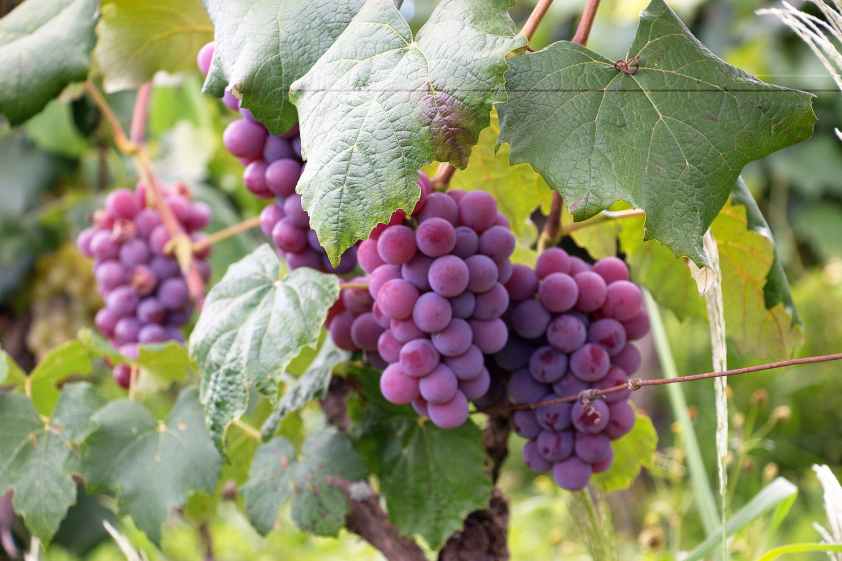
“I am the true vine, and My Father is the vinedresser. Every branch in Me that does not bear fruit He takes away; and every branch that bears fruit He prunes, that it may bear more fruit. You are already clean because of the word which I have spoken to you. Abide in Me, and I in you. As the branch cannot bear fruit of itself, unless it abides in the vine, neither can you, unless you abide in Me. I am the vine, you are the branches. He who abides in Me, and I in him, bears much fruit; for without Me you can do nothing” (John 15:1-5).

The Millennial Reign of Jesus Christ

(The following excerpts are from the Book of Isaiah in the Old Testament)

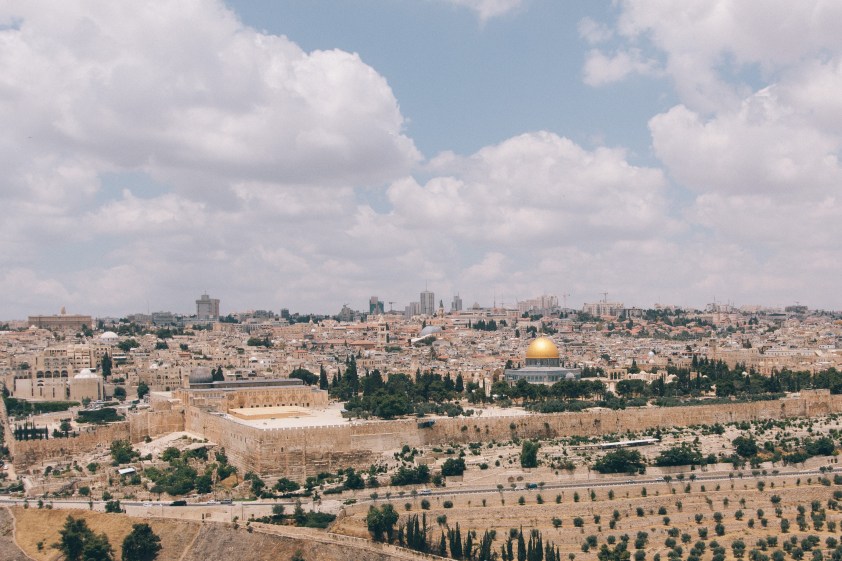
Isaiah 2:2-4 “And it shall come to pass in the last days, that the mountain of the Lord’s house shall be established in the top of the mountains and shall be exalted above the hills; and all nations shall flow unto it. And many people shall go and say, Come ye, and let us go up to the mountain of the Lord, to the house of the God of Jacob; and He will teach us of His ways, and we will walk in His paths: for out of Zion shall go forth the law, and the Word of the Lord from Jerusalem.

And He shall judge among the nations, and shall rebuke many people: and they shall beat their swords into plowshares, and their spears into pruninghooks: nation shall not lift up sword against nation, neither shall they learn war any more.”

two men in army uniforms with guns

Photo by Pixabay on Pexels.com

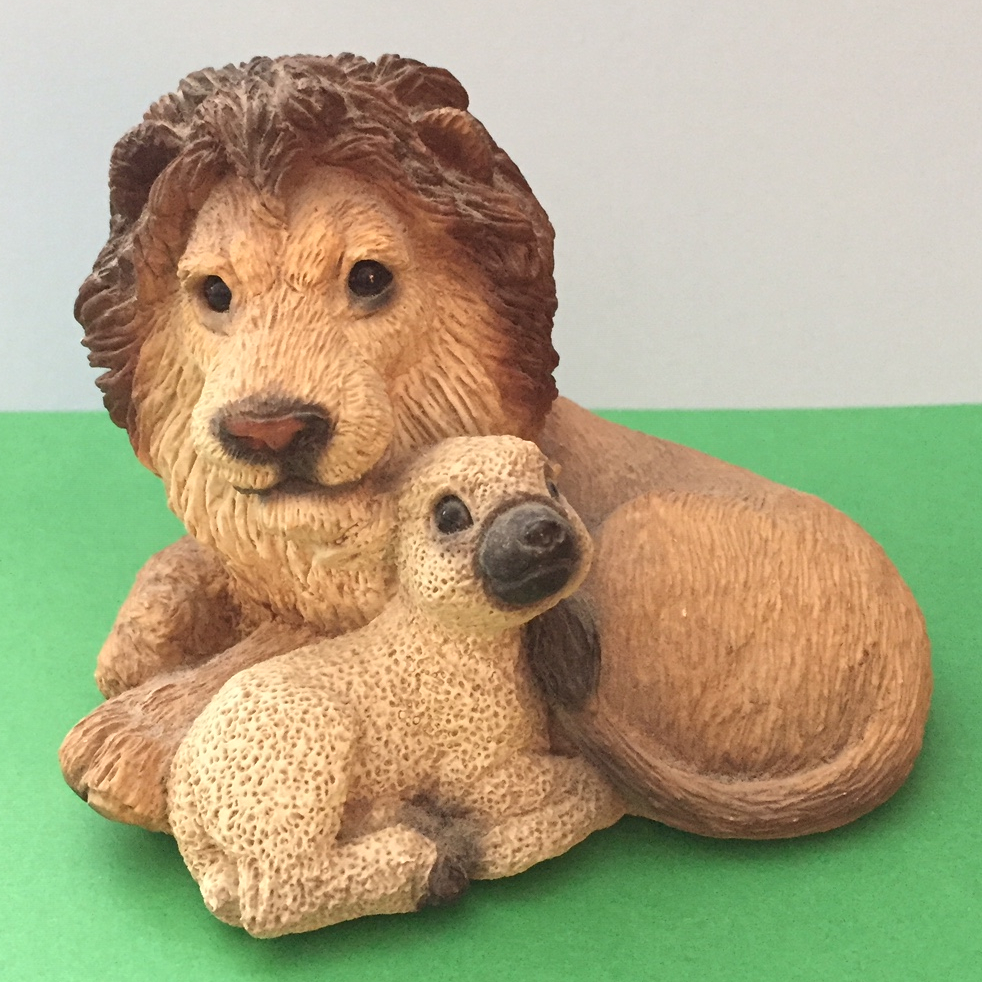
Isaiah 11:6-9 ”The wolf also shall dwell with the lamb, and the leopard shall lie down with the kid; and the calf and the young lion and the fatling together; and a little child shall lead them. And the cow and the bear shall graze (together); their young ones shall lie down together: and the lion shall eat straw like the ox. And the sucking (nursing) child shall play on the hole of the cobra, and the weaned child shall put his hand in the viper’s den.

IMG_1795

Living Water

If you live in a hot climate and spend time outdoors exercising at any time during the day, you probably have emptied your water bottle, and experienced extreme thirst at some point. John 7:37-39 says that Jesus cried out saying “If any man thirst, let him come unto Me, and drink. He that believes on Me, as the scripture has said, out of his belly shall flow rivers of living water. (But He spoke of the Spirit, which they that believe on Him should receive: for the Holy Ghost was not yet given; because that Jesus was not yet glorified.)”

John 4:10,14 says, “Jesus answered and said unto her (the woman at the well), If you knew the gift of God, and who it is that says to you, Give me to drink; you would have asked of Him, and He would have given you living water. Whoever drinks of the water that I shall give him shall never thirst; but the water that I shall give him shall be in him a well of water springing up into everlasting life.”

What is this living water that Christ offers? I believe Jesus offered the woman the Holy Spirit as a result of receiving His free gift of salvation, which is offered to every person. (see John 3:16)

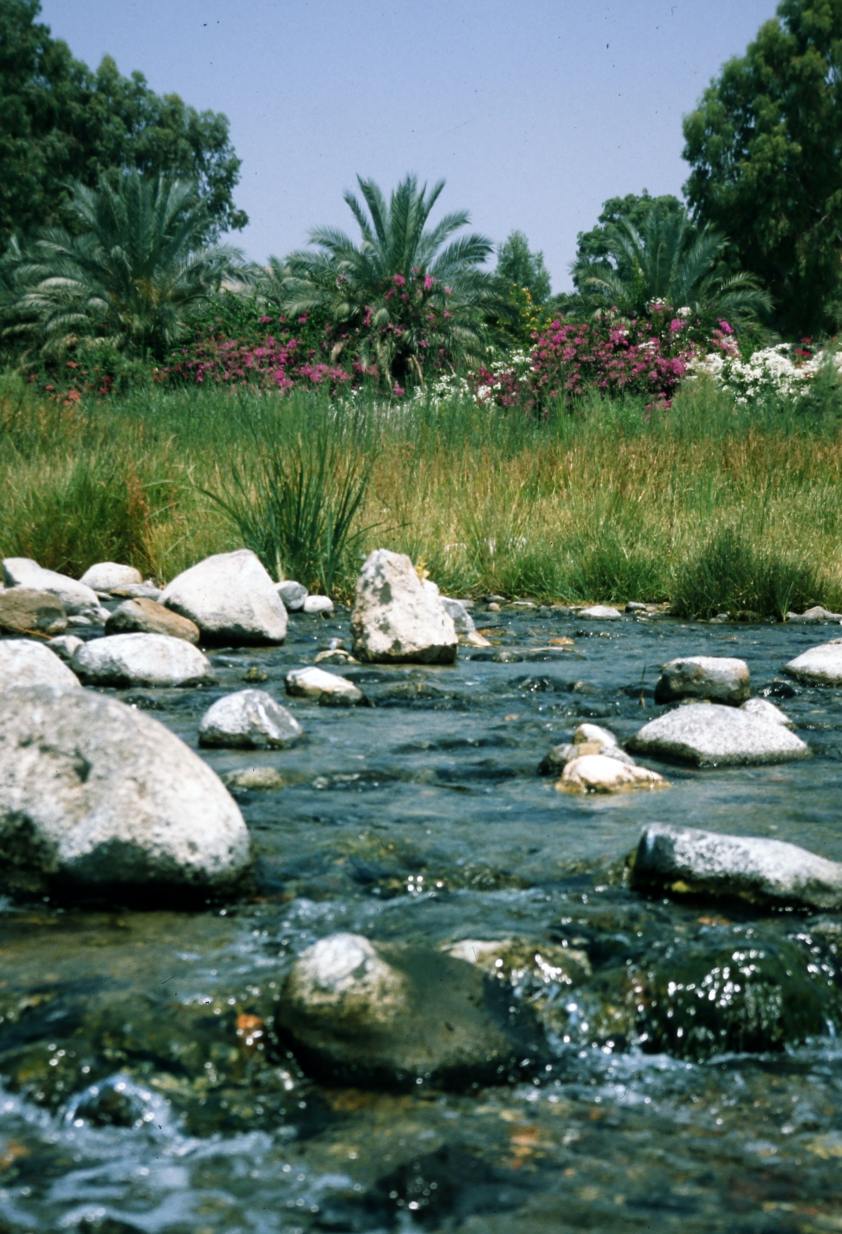
The water that comes from springs in the mountains, artesian wells, and other deep wells is cool and refreshing. Those sources of water easily satisfy our thirst, but water that is in a cistern, or in a stagnant pond or lake, has to be purified in some way to be safe to drink. En Gedi is a beautiful oasis in Israel’s desert that has crystal clear water flowing continually. It is emotionally and spiritually refreshing just to see this water flowing in a barren desert. This reminds me of the kind of water that God offers us by filling us with His Holy Spirit.

waterfall

Photo by Haley Black on Pexels.com

After a lot of praying, studying the Bible, and reading some related biographies, I have concluded that there is a lot more to this “living water- Holy Spirit” than what many Christians (especially here in our nation) realize. We have lived in many states, and I have heard believers sometimes say that they are lacking power, joy, and peace. These are things that God promises us in the Bible, and we desperately need them right now in order to not let the world situations trouble us and make us feel afraid or depressed. Luke 24:49 tells us that Jesus told His disciples to wait in the city of Jerusalem, until they were filled with power from on high. Besides the Holy Spirit and feeding on the Word of God daily, we also need to be praying fervently according to God’s will (and we need the Holy Spirit to help us know how and what to pray).

In Matthew 3:11, John the Baptist said that he was only baptizing with water, but Jesus would “baptize with the Holy Ghost, and with fire” (also told in Acts 1:5 and Acts 11:16), and in John 14:16,15:26, and 16:7, Jesus promised that the Comforter (Holy Spirit of truth) would come after His departure.

Although Peter and John would have already received the Holy Spirit on the day of Pentecost (Acts 2:1-4), it’s very interesting that later, when they were imprisoned and threatened (Acts 4:1-21) for preaching to the people and for healing the lame man, they prayed that God would grant them boldness to continue their ministry. Acts 4:31 tells us that as they prayed “the place was shaken where they were assembled together; and they were all filled with the Holy Ghost, and they spake the word of God with boldness.”
So they must have received even a deeper filling due to their need and thirst. Are you thirsty? Isaiah 44:3a says, “I will pour water upon him that is thirsty, and floods upon the dry ground.”

maud-correa-louS5ssEPjM-unsplash

Well, I am thirsty! How about you? The verses that finally convinced me that Jesus offers us more are found in Luke 11 (verses 11-13). “If a son shall ask bread of you that is a father, will he give him a stone? or if he asks a fish, will he for a fish give him a serpent? Or if he shall ask an egg, will he offer him a scorpion? If you then, being evil, know how to give good gifts unto your children; how much more shall your heavenly Father give the Holy Spirit to them that ask him?”

Like myself, some of you may have a hard time relating to a kind earthly father. Perhaps your father would have given you a stone, a serpent, or a scorpion; but the fact is, our merciful, loving, gracious heavenly Father isn’t like that, and He gives us many wonderful promises in the Bible.

Some Christians say that speaking in tongues is given to every believer when they are “baptized in the Spirit”, but the Bible doesn’t actually say that. However, in I Corinthians 14:5,18,19, Paul does say that he wishes that “all spoke with tongues”, and he thanks God that he speaks with tongues, “Yet in the church I had rather speak five words with my understanding, that I may teach others also, than ten thousand words in an unknown tongue.”

Joel 2:28 and Acts 2:17 and 18 tell us that in the last days, God will pour out His Spirit upon all flesh: “and your sons and your daughters shall prophesy, and your young men shall see visions, and your old men shall dream dreams: And on my servants and on my handmaidens I will pour out in those days of My Spirit; and they shall prophesy….” And verse 21 says, “that whoever calls on the name of the Lord shall be saved.” Praise God!

I want to end this blog post with verses from Isaiah and Revelation, “Ho! Everyone that thirsts, come to the waters; and he that has no money, come, buy, and eat” (Isaiah 55:1a). Are you hungry for more? Are you thirsty enough to ask for Living Water? “The Spirit and the bride say, Come. And let him that hears say, Come. And let him that is thirsty come. And whoever desires, let him take the water of life freely.” (Revelation 22:17)


Don’t Look Back

The following are three different instances in the Bible that tell us not to look back:

Philippians 3:13,14 “Brethren, I count not myself to have apprehended: but this one thing I do, forgetting those things which are behind, and reaching forth unto those things which are before, I press toward the mark for the prize of the high calling of God in Christ Jesus.”

The first part, “forgetting those things which are behind”, could refer to anything in your past that causes you guilt or shame, or it could even be any past achievements and successes that could discourage you if you feel that you are in a dry period of your life right now. “Reaching forth unto those things which are before” (focusing on the goal of what Christ has called us to do, and how He wants us to live as His child, including His suffering, and His death in order to experience His resurrected life) “I press toward the mark” (our objective of knowing Him more intimately) “for the prize of the high calling of God in Christ Jesus”, (the joyful satisfaction of having attained our objective).

Luke 9:62 “And Jesus said unto him, No man having put his hand to the plow, and looking back, is fit for the kingdom of God.”

pexels-photo-3713593

Believing that the lesser matters of life are more important than being obedient to the Word of God and the greater priority of the work that God has for us, makes a Christian of little use to the Lord.

Genesis 19:17b,25,26 “Escape for your life; look not behind you….And he [the Lord] overthrew those cities, and all the plain, and all the inhabitants of the cities, and that which grew upon the ground. But his [Lot’s] wife looked back from behind him, and she became a pillar of salt.”

Genesis 19 tells the story of how God destroyed the cities of the plain of Jordan because of the wickedness that was there. Lot had “vexed” his spirit while living there due to the rampant sin that was around him, but God still found him to be a righteous man and said that He would spare he and his family if they left their home in that city very quickly. (We know that Lot and his wife had two unmarried daughters and some married daughters, but the families of the married ones chose not to leave the city after they were warned.) As they escaped, the angel told Lot, his wife, and his two daughters not to look back behind them. As the fire and brimstone rained upon the cities, Lot’s wife looked back, and the Bible says that she became a pillar of salt. Perhaps she looked back because she had more family there, or it may be that she was thinking about her home and all of her stuff that she had there. In Luke 17:21-33 Jesus uses this incident as a warning of what things will be like in the “last days” before His return (“Remember Lot’s wife”, verse 32). [This occurred in the area of the salty Dead Sea, and there is a lot of rock salt everywhere in that region.]

pexels-photo-1194408

So, what can we learn from these passages of Scripture? We are reminded to keep our focus on the Lord. No matter what our past was like, we need to look at what God is doing in our life right now, and what He can and will do in the future. Satan will try to remind us of all our past failures. He may try to shame us, making us feel guilty and depressed about our past sins. He may even try to make us feel proud, telling us how good we are compared to others, but let me remind you to plug your ears to the enemy, and don’t look back!

Are You Guilty of Anthropomorphism?

If you regard animals as “thinking or feeling” similarly to the way a person does, then you are guilty of anthropomorphism. Although animals may show fear, anger, and pleasure, it is difficult for humans to tell how much of their behavior is actually from instinct and how much is reflex. Animals do not feel emotions in the same way that man does, but because our world is seen from a human perspective, it may be hard to resist being anthropomorphistic. Saying that a bird “sings” to keep intruders from its territory, and saying that some animals hide under bushes when they are “afraid” of a predator such as a hawk, are examples of anthropomorphism.

Many animals are quite intelligent. Many invertebrate animals behave mostly by reflexes and instincts, and some vertebrate animals have more complex brains and are capable of learning. However, a vast gap still exists between human behavior and the most intelligent animals.

Some significant differences between human and animal behavior are as follows:

  • Humans are capable of appreciating beauty such as music and art, but animals show no evidence of having this aesthetic sense.
  • Humans have a complex language that expresses many ideas. Animal language consists of mating calls, warning notes, etc., but they do not use their “words” as symbols of ideas.
  • Humans must learn skills; animals behave by instinct. For example, a person must learn some carpentry in order to build a house, whereas birds and wasps build their homes by instinct.
  • Humans have a reasoning ability that is unmatched by any animal.
  • Humans accumulate knowledge with each generation, building on the accumulated knowledge of previous generations; but animals just continue to behave as their ancestors did. For example, a mother dog can learn many tricks, but she does not pass any of her knowledge on to her puppies.
  • Humans have the ability to love (or hate) other people in manners unmatched by animals. Human mothers generally love their children throughout their lives; but mother animals protect their young until they are able to care for themselves. After that, she gives them no further attention.
  • Most importantly, humankind has a moral sense of right and wrong. Animals are considered amoral, neither moral nor immoral. So, where does this sense of morality come from? We must look into the Word of God to answer this question.

man wearing black crew neck shirt reading book

Photo by Oladimeji Ajegbile on Pexels.com

Genesis, the first book of the Bible, gives us the account of creation. We read that God created the world and all that is in it in six days, and then rested on the seventh day. Genesis 1:26-31 gives the account of the creation of man. We see that man was created separately from the animals on the sixth day of creation, and was the “grand climax” of all that God has accomplished during His creation week of miracles. Genesis 2:9 says that God formed man’s body from the dust of the ground, and then breathed into his nostrils the breath of life, and “man became a living soul.”

Although Genesis 3:1-24 gives the account of the “fall of man” and the “curse”, humans still retain the image of God that was bestowed upon them at the time of creation. James 3:9 reminds us that we are “made after the similitude (likeness) of God.” We recognize that only humankind has the capacity to choose the free gift of eternal life that God offers. Moral discernment, self-consciousness, fellowship with God and man, and the practice of worship are all possible because we are made in the image of God.

Humans are the only creature that was made in the image of God, so we can rejoice with the writer of Psalm 139:14-17 when he says, “I will praise you; for I am fearfully and wonderfully made; marvelous are your works, and that my soul knows very well. My substance was not hid from you when I was made in secret, and skillfully wrought in the lowest parts of the earth. Your eyes did see my substance, yet being unformed; and in your book all my members were written, which in continuance were fashioned, when as yet there was none of them. How precious are your thoughts unto me, O God! How great is the sum of them!” (These verses make it very clear that we are not just fetal tissue when in our mother’s womb).

I’d like to use a short passage from “The Mystery of Memory” by Alfred M. Rebwinkel as a summary. “Man was created a rational being, endowed with intelligence. This means that man was endowed with the faculty of reason and the ability to learn. Man is not like the animal, limited by instinct to a fixed pattern of life; he can benefit by past experience and direct his course of action accordingly. He is free to select a course of action, weigh the consequences of his choice, and act accordingly….” I pray that each of you who read this blog post would use your free will, and choose to make Jesus Christ the Lord of your life, and then walk in this “newness of life” (see Romans 6).

What’s in a Name? (part 3): Names of God

Psalm 9:10 “They that know Your Name will put their trust in You. For You, Lord, have not forsaken those who seek You.”

All hail the power of Jesus’ name!
Let angels prostrate fall;
Bring forth the royal diadem,
and crown Him Lord of all!
Edward Perronet

The Hebrew word (YHWH) that God gave Moses in Exodus 3 has no clear-cut simple translation. The closest translation is “I am who I am”. This not only reveals God as the being who is absolutely self-existent, but here, the “to be” verb means more than just “to exist.”

Waymaker

The names of God describe the wondrous glories and provisions wrapped up in God’s name. However, God reveals these aspects of His nature to us by actually doing for us what He proclaims Himself to be. We are covered on all fronts, so we can always stand confident in the Lord. The more we get to know God, we see that He is giving us an ever-increasing revelation of the awesome character of Himself.

The following are names of God and Jesus in English from the Hebrew and Greek languages:

  • Yahweh-Jehovah/The Lord is God (Exodus 3:14)
  • Adonai (Genesis 15:2)
  • El-Shaddai/The Almighty God (Genesis 17:1)
  • Jehovah-Elyon/The Lord God Most High (Genesis 14:19,20)
  • Jehovah-Jireh/The Lord will provide (Genesis 22:14)
  • Jehovah-Repheka, Rophe, or Rophi/The Lord who Heals (Exodus 15:26)
  • Jehovah-Elohim/The Lord is God (Genesis 1:26)
  • Jehovah-Tsebaoth/The Lord of Hosts (Isaiah 37:16)
  • Jehovah-Rohi/The Lord is My Shepherd (Psalm 23:1)
  • Jehovah-Shalom/The Lord is Peace (Judges 6:24)
  • Jehovah Makadesh/The Lord who Sanctifies (Leviticus 20:8)
  • Jehovah-Nissi/The Lord is my Banner (Exodus 17;15,16)
  • Jehovah-Tsidkenu/The Lord is our righteousness (Jeremiah 23:6)
  • Jehovah-Shama/The Lord is There (Exodus 48:35)

Check out the lyrics of the chorus of the following song that lists many of the names of God:

You Are Holy

Other names of our Lord:
God is Savior (Matthew 12:1); The Anointed One/Messiah/Christ (Luke 3:21,22); Master (Matthew 8:19); Immanuel/God With Us (Isaiah 7:14 and Matthew 1:23); Son of God (Luke 1:35, Mark 14:6, Matthew 16:16, and John 11:27); Son of Man (Matthew 24:30);
Redeemer (Job 19:25)

And: Creator; The Way; The Truth; Love; Light; Bread; Wonderful; Counselor; The Word; Lily of the Valley; Morning Star; Prince of Peace; Alpha and Omega (The Beginning and the End); Living Water; Wisdom; Everlasting Father; Friend; The Vine… and more!

“Give unto the Lord the glory due His Name; worship the Lord in the beauty of holiness.”
Psalm 29:2

What’s in a Name (part 2)

If you are going to have a baby (it doesn’t matter whether this is your first, last, or anywhere in the middle), first pray, and then get yourself a pen and some paper, a book for naming babies, and start writing down some different possibilities. Or, perhaps you are only picking out names for a novel that you want to write; the meanings of names are interesting, and it can be a lot of fun to pick out the “right name”!

The names we give our children come from all over the world and reflect our cultural heritage. Last names often give us information about our ancestor’s occupations or their geographic location. Names may stand for some physical characteristic or special achievement of a family member, they may honor a respected family member, or they may be a popular name that comes from a movie, a song, a novel, or a television program.

Names are one of the most important gifts that parents give to their children. When they pick out a name, they are making a major decision that could have positive or negative effects on their child; so choosing the right name for your baby carries with it a lot of responsibility.

The following are some suggestions to consider when choosing that special name. First, consider your own name, and ask yourself if you have been pleased with the name that you were given, and try to remember if you have ever been picked on because of your name.

Consider the nicknames associated with a possible name. Nicknames promote some intimacy among family and friends, so are considered a sign of affection. Some nicknames are shortened names of a given name, like the many nicknames for Elizabeth (Beth, Bess, Liz, etc.). Other nicknames actually come later in life, and are not related to the child’s birth name.

Some parents want very formal names for their children (Victoria, Nicholas, Alexander), and other parents want informal names (Vicki, Nicky, Alex). Middle names help to distinguish individuals in our very populated world. When choosing a first name, check to see if it sounds good with their last name. When picking out a middle name, be sure to look at what the child’s initials would be, and stay clear of initials that would have negative associations (B.A.D., S.I.N., P.I.G.).

Names that parents may think are cute or humorous may not be considered that way to the child (Rusty Hammer, Snow White, Rose Bush, etc.). Also, if you consider names that are common for boys and girls (Terry, Tracy, Robin, Jamie, etc.), keep in mind that generally girls don’t mind confusion with these names as much as boys do.

If your last name is really long and difficult to spell (Eisenstadt, Schwarzeneggar, etc.), do your child a favor and choose a first name that is easier to say, spell, and write. Also, stand clear of the trendy names that are “in”; your child won’t feel as special if there are 4 or 5 other children in their neighborhood or classroom at school with the same name.

Although it has been somewhat of a tradition to name a boy after his father, grandfather, and perhaps even his great grandfather (Robert I, Robert II, Robert III), this could cause some confusion when those with the same name don’t know which one is being spoken to, and sometimes, the other boys in the family may feel jealous or less important than the one with their father’s name.

A good place to find names and their meanings is in the Bible. There are over 3000 great sounding names in the Bible. Some parents choose a Bible name for their baby that reminds them of one of their favorite heroes from God’s Word, and other parents choose names that mean something that they would like to see in the character of their child, or associated with their child (Matthew- a gift of God, Naomi- sweet, Rachel-gentle lamb, David- beloved, etc.).v