As a Peculiar People, Shine as Lights in a Dark World

The following verses in the Bible use the term “peculiar” to describe a people set apart for God:

  • Psalm 135:4 and Exodus 19:5 call them “a peculiar treasure” or His special personal property.
  • Titus 2:13 and 14 says, “….to purify for Himself a peculiar people, zealous of good works.”
  • Deuteronomy 14:2 says, “thou art a holy people unto the Lord thy God…, a peculiar people”.
  • 1 Peter 2:9 says…, “a peculiar people, that you should show forth the praises of Him who has called you out of darkness into His marvelous light.”

What is meant by a “peculiar people”? Some of the Webster’s dictionary definitions for “peculiar” are listed as “out of the ordinary, different, special, distinctive, exclusive, and unique; and the definition for “light” is brightness or illumination.

In 1 John 1:5 and 6 we read, “God is light, and in Him is no darkness at all”, so in order to have fellowship with Him, we must walk in His light. The light of the world describes the mission of Christians in this dark world. Our light is to shine forth into the darkness of all human depravity. Even the small light of a candle can dispel great darkness, but darkness can never dispel light.

Matthew 5:14 says, “You are the light of the world” (and says that even a candlestick gives light to everyone in a house), and Matthew 5:16 says to “Let your light so shine before men, that they may see your good works, and glorify your Father which is in heaven.” Two other imperative verses in the Bible concerning our call to be light in the world are John 12:36 which says, “….be the children of light”, and Ephesians 5:8 says that since we are no longer in darkness, we are to “walk as children of light.”

So what does it mean in practical terms to be a peculiar people and to walk in light? 1 Peter 2:12 helps us to understand. First, we are to have an honest or honorable lifestyle, so that others “may by your good works which they shall behold, glorify God…”
Philippians 2:15 says”that you may be blameless and harmless, the sons of God, without rebuke in the midst of a crooked and perverse nation….”

“Be not overcome of evil, but overcome evil with good.” (Romans 12:21)

Matthew 5 is too long to write it out, but if you take the time to read it, you will see many examples of how to be a holy and unique individual “fit for the Master’s use” (2 Timothy 3:21). As you read it, pay particular attention to verses 3-12 and verses 38-48. When we become followers of Christ, our lives are changed. The command of Christ to love our enemies (verse 44) is based on the love that comes only from God, since it is not possible to love them on the basis of mere human affection. Love is the ultimate reflection of what it means to be a holy, peculiar people. Choosing to love our enemies is not an option. The Holy Spirit will work in us, ever conforming us to the image of Christ. The natural man often lets his anger control him; he wants to get even and strike back at others; and he has a hard time forgiving anyone who has hurt him or done him wrong. However, as Christ’s disciples, since we no longer walk in the flesh, we receive the supernatural power of God to walk in the Spirit. Now we are able to “overcome evil with good” (Romans 12:21), and as peacemakers, we are able to be ambassadors of the gospel to our troubled world.

As I was preparing this blog post, the Holy Spirit convicted me of my negligence in this area of spiritual maturity. He showed me that even if we haven’t been living as light in this dark world, it isn’t too late to become a peculiar people. During this time of division, unrest, and turmoil, the world desperately needs our light.


If Your Eye Causes You to Sin, Pluck it Out

Matthew 18:8-10 give us some somewhat shocking advice on what to do when we are sinning or tempted to sin. It says, “Wherefore if your hand or your foot offends you, cut them off, and cast them from you: it is better for you to enter into life lame or maimed, rather than having two hands or two feet to be cast into everlasting fire. And if your eye offends you, pluck it out, and cast it from you; it is better for you to enter into life with one eye, rather than having two eyes to be cast into hell fire.” (See also Mark 9:43-47 and Matthew 5:29-30).

Even though I am not entirely sure of the meaning of this passage, I don’t believe that God wants us to literally do those things; however, obviously those verses were written to express the seriousness of sin. I am going to focus on what seems to be a major problem in today’s world. With access to all kinds of things on the internet, pornography has become a major stronghold in the lives of many people. The seeing of sexual acts causes some people to act out (or want to act out) what they see, and many have ruined their own lives and the lives of others by not “plucking out their eyes” when they recognize that they have a problem with sin in this area.

Nowadays, pornography is more than just seeing naked men or women, which is still not pleasing to God (see Genesis 3:10,11, and 21). I have read about and heard testimonies of people who have destroyed their marriage and hurt others, saying that this sin reaches into the pit of hell and covers every kind of perversion imaginable. God makes it clear that “the wages of sin is death” (Romans 6:23), and Christ tells us that we are to put to death all sins that reside in our bodily members since we are dead to sin and alive in Christ (Romans 6:2-4). Colossians 3:5 and 8 tell us to “mortify therefore your members which are upon the earth; fornication, uncleaness, inordinate affection, evil desires…for which sake the wrath of God comes on the children of disobedience.” We are not to continue in sin; it must be repented of (1 John 1:9)

A lot of children have been harmed by either looking at pornography themselves, or by being sexually abused in some way by others. Jesus is very protective of little children (Mark 9:36, 37, and 42, 10:13-16). Luke 17:2 says “It would be better for him that a millstone were hanged about his neck, and he be cast into the sea than that he should offend one of these little ones”, and Matthew 18:10 says, “Take heed that you harm not one of these little ones; for I say unto you, that in heaven their angels do always behold the face of my Father which is in heaven.”

If you are addicted to pornography, first, pray that God would break the bondage of it in your life, and get help immediately from a Christian counselor, a church pastor, or someone who can keep you accountable. Also, throw away, and stay away from any sources that are causing you to stumble, even if you have to get rid of your computer or television. Those suggestions seem minor in comparison to plucking out your eyes, wouldn’t you agree?

Is Not This the Carpenter’s Son?

When a person becomes a follower of Jesus Christ, there will be some major changes that take place in his life. The ungodly desires and habits of his old life will pass away (some immediately and some over time), and his friends and family will be surprised by his new conversation and behavior. A few may actually envy his “new life in Christ” (2 Corinthians 5:17), and wish that they could change their ugly behavior for the love (1 John 4:7,8), joy (John 15:11), and peace (Philippians 4:7, John 16:33) that they now see in him; others may be hateful and jealous, like Cain, who killed his brother Abel (Genesis 4:8) and may want to hurt or even kill the new believer (this is common in some Muslim countries). Other people that know him may say things like, “He’s just going through a stage”; “This will pass”; “I’ve known him since he was a kid, and he’s always been different and up to something”; or “Since when did he become so ‘holier than thou’ that he can’t go partying with us?”, etc. In Scripture, we see a similar example of this reaction toward Jesus Himself.

Matthew 13:54-58, Mark 6:1-6, and Luke 4:16-24 all record the unbelief, doubt, and rejection that He got in His hometown of Nazareth. The following passage comes from Matthew 13, and says, “And when He was come into His own country, He taught them in their synagogue, insomuch that they were astonished, and said, Whence has this man this wisdom, and these mighty works? Is not this the carpenter’s son? Is not His mother called Mary? and His brethren, James, and Joses, and Simon, and Judas? And His sisters, are they not all with us? Whence then has this man all these things? And they were offended in Him. But Jesus said unto them, A prophet is not without honor, save in His own country, and in his own house.” Since even Jesus was rejected and experienced such unbelief, we should not be too surprised or disappointed if we receive the same reactions. [Sadly, Christ performed His first miracle in the area of His home town (John 2:1), but He didn’t do many other works there, because of their unbelief.]

Here is a word of caution for some new Christians. You may want your friends and family to experience what you now have, so you may be tempted to either try too hard to persuade them with your words, or you may find yourself hanging out with old companions with the purpose of trying to persuade them to become Christians. However, we must be careful that we don’t fall back into ungodly habits by going places or doing things that would not be pleasing and glorifying to God. 2 Corinthians 6:14 tells us that we are not to be “unequally yoked together with unbelievers: for what fellowship has righteousness with unrighteousness? and what communion has light with darkness?” And other Scripture tells us not to argue or strive with others. It is best to share the gospel with them, and tell them what God is doing in your life, but then, just put them in God’s hands by praying diligently for them.

Also, as I mentioned above, when you have this new relationship with Jesus, you will experience some immediate changes (for some, they no longer have some of the desires that they had before coming to Christ), but some of the other changes will take place as you grow in the Lord, and often the they will be the consequences of the choices you make as you learn to obey the teachings of Christ. In Romans 12:2 we read, “Be not conformed to this world: but be ye transformed by the renewing of your mind, that you may prove what is that good, and acceptable, and perfect, will of God.” So then, more transformation comes as we grow in the faith. Romans 10:17 says that faith comes through the hearing of the Word of God. Reading and studying God’s Word on a daily basis, and talking to God frequently will keep that relationship alive and flourishing.

Growing Wiser While You Wait (Part 2)

It’s very important to choose movies that will help you grow wiser. The following is a short summary of some of the most uplifting movies that you and your family could ever watch, and you may find yourselves enjoying them over and over as you share them with others.

My favorite movies are all of the Sherwood Picture movies produced by the Kendrick brothers, but I will include a few other favorites, too.

Flywheel is about a car salesman, who changes his dishonest ways of selling cars, and sees the fruit of doing things God’s way.

Facing the Giants is a great movie for football enthusiasts that teaches lessons on perseverance, faith, and patience.

Fireproof encourages us to value the marriage covenant more, and to get rid of things that may destroy that relationship.

Courageous shows how a godly father can have an incredible impact on a family.

War Room is a film about prayer, and how God rewards our diligence of spending time with Him.

Overcomer, their newest film, begins by showing the consequences that negatively affect a child when parents make selfish choices; and then shows how God can heal relationships when a parent repents, still leaving a lasting legacy for his child.

Faith Like Potatoes is the true story of Angus Buchan, a Scottish-born African farmer who trusts God completely even when the odds are against him.

Second Chance is about a church that is ministering to the needs in an inner city along with its sister church that has grown into a mega-church and is focused on its own agenda rather than on the needs of people.

Treasures of the Snow teaches the lesson of forgiveness, whether we need to forgive ourself or someone who has terribly hurt us.

Growing Wiser While You Wait Part 1

Why another blog post about waiting, and why is it that we have to spend so much of our lives waiting? All I can say is that waiting seems to be a normal part of life for everyone. “Hurry up and wait” is a common expression in the army, and that is how I sometimes feel when I prepare for some big event, and then it doesn’t happen as I expected. For example, the family was ready and waiting for my first grandchild to be born. However, he arrived fifteen days after his due date. Another good example of having to wait occurred recently after preparing for a big event that has been canceled and rescheduled four times due to the coronavirus. This can be very frustrating for some people, and I happen to be one of them. I am reminded regularly that life is not always predictable, and that we have no control over some circumstances in life.

During this unique and unpredictable time while we are waiting for more businesses to open, and for our churches to begin holding services in their buildings once again, I want to share some great reading and movie ideas with you. In this post, some of you may be introduced for the first time to these ministries where you can get free materials or purchase materials that you are interested in (links to their websites will be included). If you are already familiar with these organizations and receiving materials from any of them, I’m sure you will be able to find other great materials listed on their websites.

Voice of the Martyrs (founded be the Romanian couple, Richard and Sabina Wurmbrand), and Open Doors (found by Brother Andrew), are ministries to the persecuted church around the world. They encourage and minister spiritually, emotionally, and physically to those who are being persecuted, and they inform us of things that are not often mentioned in the news.They also give us information and ideas that can help us pray more effectively for those believers. Hebrews 13:3 says that we are to “remember them that are in bonds, as bound with them; and them which suffer adversity, as being yourselves also in the body.”

Recently, Iran Alive has become one of my favorite ministries. Dr. Hormoz Shariat has a television ministry that reaches out to the Muslims in Iran and in other countries in the Middle East. Through reading materials from this ministry, I have really grown to love and respect the Iranian believers. The church (body of believers in Christ) in Iran is one of the fastest growing churches in the world. In countries where Christians are persecuted the most, the church seems to be “alive” and stronger in the Lord.

Fouad Masri, a Lebanese-American Christian, started Crescent Project. He has a real heart for the Muslim immigrants in our country. This organization has great resources and ideas on how to reach your Muslim neighbors for the Lord. Most Muslims, even those living here in the USA, have never heard the truth about who Jesus is, nor of His awesome love, mercy, and grace for all people.

Answers in Genesis (started by Ken Ham) and the Institute for Creation Research (founded by Henry Morris, Sr.) have current and newsworthy topics that are related to Creation Science and apologetics. Scientists from every major field of Science who are believers in Jesus Christ, have produced great science resources. Advances in technology have shown how incredibly complex science really is, and have caused serious problems for the evolutionists. Both of these ministries also have museums (Creation Museum, Ark Encounter, ICR Discovery Center) that make science and the Bible come alive, and have faith-building materials for all ages.

It’s so easy to waste your time on things like Facebook, Twitter, video games, movies, television programs, and the like that have very little value. Instead, grow wiser by getting to know the Lord better by reading more of His Word daily, and find other resources that will eternally benefit you and your family. In Ephesians 5, we are told to “redeem the time for the days are evil”. When we look around us and hear current news, we can see that we are getting closer to the “end of the end times”, so let’s all find godly things to do with our time while we wait.

A Tribute to my Funky Family

First, what is a “funky family”? The dictionary definitions to “funky” that most closely describe this family are unconventional, eccentric, emotional, and informal.

Let’s learn some more about this interesting family made up of different types of animals that grew up in the wild in less than ideal circumstances, and without much training or supervision, but learned the term resilience through their experiences. Each of these animals had unique personalities and gifts, and were chosen to be placed in this family by their awesome Creator.

brown kangaroo near tree

Photo by Ethan Brooke on Pexels.com

The firstborn, Kathleen Kangaroo, ended up being the matriarch of the most prolific children. Caring for little ones seemed quite natural for her and for most of her family. [One of her children or grandchildren are always pregnant, and they always have a joey being carried around in their pouch]. Like other kangaroos, she was a good jumper, and even did aerobics up until delivery with one of her little ones. Kathleen was the most docile (submissive, obedient, and easy to get along with), and somewhat quiet and shy when she was young.

brown and black monkey hanging from a tree

Photo by Ludwig Kwan on Pexels.com

Molly Monkey was the second-born. After her elevator operator experience, she loved going up and down in the trees chattering away, sharing some news, or a joke. She was quite good-natured, a little loud at times, and for a while loved to do hairstyles for the other animals. A monkey’s nose is usually one of their distinguishing features. For Molly, the main time you noticed her nose was when she wasn’t telling the truth.

green bird

Photo by Roshan Kamath on Pexels.com

Next, we have Corina Canary. She was a dreamer, a reader, and a fighter. Just like small dogs sometimes have to act more ferocious, she could be quite strong-willed in spirit, in spite of her small physical body and health problems. Whether defending herself or others, she proved herself to be quite strong, and I’ll bet that she is one canary that would stay that way, even if placed in a mine to check the oxygen level (as was the practice years ago).

mika-brandt-UlipBbZpweg-unsplash

Since Leonard the Lion was the first male born into this family, he was somewhat spoiled by everyone (except his father). He was very intelligent, but not always wise. He claimed that he was King of the Beasts and sometimes bullied the other animals to try and prove it. A male lion is often a loner or a fighter.  Male lions don’t usually live as long as female ones (and he may not either if he doesn’t stop his smoking.) He’s a lot of fun to be around, because he can be hilariously funny with his jokes, his puns, or his crazy antics. He was an aspiring writer; in this pandemic, he’s “essential” as a city bus driver; and he’s also an obsessed golfer (so if you see any lions at the golf course, tell him hello from me).

teddy bear toy

Photo by Marina Shatskih on Pexels.com

Next was Becka Bear. She was sometimes criticized and misunderstood, but she was really quite a tame bear. She generally thought of herself as a Teddy Bear, that just wanted to be loved and hugged, and stand up for the underdog. (However, when she became a mother, like most bears, she could become aggressive if anything got between her and her cubs.) She loved not only being a teacher to her own children, but also a school teacher to other little animals. She traveled the most, and the farthest away from the wild in which she was raised. Although she was mostly a vegetarian healthnut, she did enjoy a good salmon now and then. Their mother once called her a “seeker and thinker” (which seemed quite accurate, and pleased her very much).

leopard on brown log

Photo by Flickr on Pexels.com

Then, there was Jeremy Jaguar. This wild cat struggled physically and emotionally through much of his life, but through those difficult experiences, he grew stronger, more compassionate, and quite pleasant. All true cats are from the Felidae family, and are very playful. In Latin, the word “felix” means “happy”, and this short and stocky, good-looking cat ended up being a favorite uncle to many of his nieces and nephews, because of his fun personality.

animal branch cute furry

Photo by Natalija Mislevicha on Pexels.com

Last, but not least, was Stanley the Squirrel, the “baby” of the family, who had been a little spoiled by the rest of his siblings. His size and shape helped him to climb trees, cliffs, and other things very easily like most squirrels. He was adventurous and daring, a good leader and a good hunter. This outdoor, industrious creature has had a unique variety of jobs and experiences that have helped him mature and recover from some of his early spoiling.

So now, we have covered a bit about each member of this fun, funky, and (dis)functional family. Even though many of them have moved away from where they grew up, they still have a special relationship with each other, because of the common experiences they shared growing up in the wild. This unique group of animals are actually family, and more than family! They are also friends that encourage one another, help one another out when there is a problem or a special need, laugh and cry with one another, agree to disagree, sometimes even argue or get upset with one another, but also forgive one another. When they get together (even when it is only once or twice a year for a couple of them), they quickly get reacquainted, and have a funky, family time.

A Tribute to Families

The words “family” and “families” are mentioned 300 times in just the Old Testament, and the words “husband,” “wife,” “mother,” “father,” “son,” “daughter,” “sister,” “brother,” “child,” and “children” are mentioned hundreds of times in the Old and New Testament. The entire Bible actually revolves around the Father/Son relationship of God and Jesus.

Family is the oldest institution known to man, and the most fundamental of all institutions. It is also the backbone of a nation, since God uses the family to transmit His knowledge from one generation to the next. This is a strategic and eternally vital task to ensure that the light of God’s truth is passed on and not lost from the succeeding generations. Statistics in this area aren’t so great right now. Perhaps, you could be the first in your family to begin a godly lineage and family tree.

The Bible covers every aspect and facet of family relationships. Although individuals have all sorts of ideas and opinions about what a family is, or is supposed to be, and they have their own ideas on how to train children, it’s not our opinions that really matter. It is what God says in His Word, and instructs us to do, that matters.

Genesis 2:23 and 24 begin the husband and wife relationship of marriage, and in Genesis 1: 28, God blesses them and tells them to be fruitful and multiply, showing us that procreation was to be a big part of marriage. However, this was for the purpose of raising up godly children. It’s obvious that most couples can bring a child into the world, but just producing offspring doesn’t really make a “mom” or a “dad”. Psalm 127:1 says that unless the Lord builds the house, they labor in vain that build it. As you continue reading that chapter, you will find more information about the family. It says that children are a heritage of the Lord, and that “as arrows are in the hand of a mighty man, so are his children…, and happy is the man that has his quiver full….” That sure is a lot different than couples having none or only one or two children.

Mark 10:6-9 says, “From the beginning of the creation God made them male and female. For this cause shall a man leave his father and mother, and be joined to his wife; and the two shall be one flesh: so they are no more two, but one flesh. What therefore God has joined together, let not man separate.” God’s ideal plan for marriage is one man for one woman for life.This plan works when a man loves and leads his family, when the wife respects and supports her husband, and when, with proper training, their children obey and reverence their parents and God. This marriage relationship was actually patterned to illustrate Christ’s love for the body of Christ (the church).

The responsibility of teaching one’s children is multigenerational. Deuteronomy 4:9 tells us to teach God’s ways to not only our sons, but to our son’s sons, and Psalm 78:5-6 says we should make these things known to our children, “that the generation to come might know them, even the children which should be born; who should arise and declare them to their children.”

We can find Scripture to help us know the specific roles for each family member. For husbands and fathers, read Ephesians 6:4, Genesis 18:19, and Isaiah 38:19; for wives and mothers, read 1 Peter 3:1-6, Ephesians 5:22-24, and Proverbs 31:10-31; for children, Ephesians 6:1-3; for parents, Proverbs 22:6; and there are many more examples.

Suppose that you were not raised in a Christian home, and your family is so unlike the examples that we see in the above verses. Well, as a child of God, you need not be discouraged. When we come to Christ, we are adopted into the family of God, and we have many brothers and sisters in Christ. In fact, at one point during Christ’s ministry on earth (Mark 3:33-35), some people in the crowd told Him that His mother and brothers were looking for Him, and He replied with, “Whoever does the will of my Father, the same is my brother, my sister, and my mother”, again, stressing the family relationships we have when we are children of God. (And yes, it is so wonderful when a person is both blood related and spiritually related in the Lord.)

One of my favorite examples of God’s love for family is in John 19:26 and 27 where Jesus looks down from the cross and sees His mother. He says to her, “Woman, behold your son!” and to His disciple, John, He says, “Behold your mother!” Even while He was suffering and ready to die, He thought of His earthly mother and wanted her to be taken care of.

I want to leave you with one very important thought. There is only one possible thing that you could take to heaven with you from this earth, and that is your child (or children). That is because, as a parent, you can have the most influence over your children.

Happy Mother’s Day!

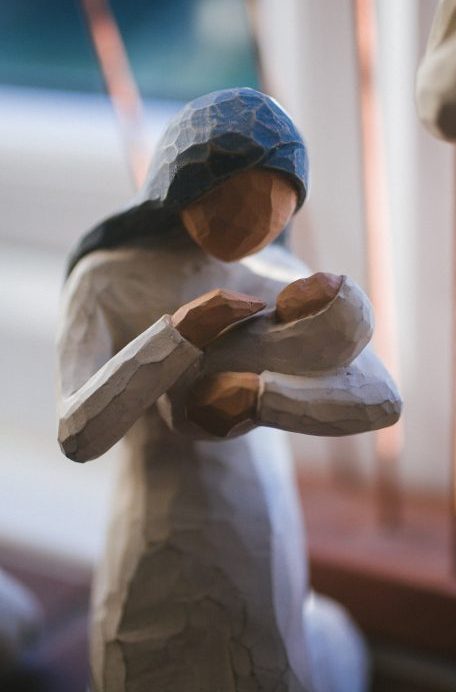
May 10th is Mother’s Day here in the USA. This is a special day to honor the woman who carried you in her womb for 9 months, brought you into this world, and most assuredly, gave of herself sacrificially for you for at least some of your life, even if your family situation was far from ideal.

First, I want to mention two very special mothers in the Bible, who gave sacrificially to their children, and how they dedicated them to the Lord. In Exodus, chapters 1 and 2, we read how the family of baby Moses risked their lives to save him, even after the Pharaoh of Egypt commanded that every baby boy was to be killed during birth, or to be cast into the river after he was  born. Moses ended up being the leader that brought the Israelites out of Egypt, through the wilderness, and to the Promised Land.

Then, in 1 Samuel 1 and 2, we read about Hannah, who had been barren (and provoked by another woman, because she was unable to have a child). Here are some facts about Hannah that ended up making her an ideal mother when she finally did have a son. She realized that being a mother was a beautiful, lofty calling, so she prayed fervently and persistently that God would bless her with a child. She promised God that she would dedicate and give this child to the Lord; She gave her son, Samuel, lots of time, training him in the ways of the Lord;  Then, she kept her promise to God, and I’m sure her prayers followed him throughout his life. At a time in Israel when no one was hearing from God because of rampant sin, God used Samuel as a prophet to bring His message to the people.

Well, the circumstances in my life weren’t as ideal as the above ones, and my siblings and I didn’t often get the time and attention that we needed; but in spite of the many hardships my mother faced in life, she truly was an exceptional mother in many ways, and deserves admiration and respect. I didn’t understand and appreciate how remarkable she was until I got to know her better shortly before she passed away by caring for her and reading her poetry that she had written through her difficult years, but by then it was almost too late. So, I really do love her dearly and wish I could give her a hug, and tell her that, as I wish her a “Happy Mother’s Day!”

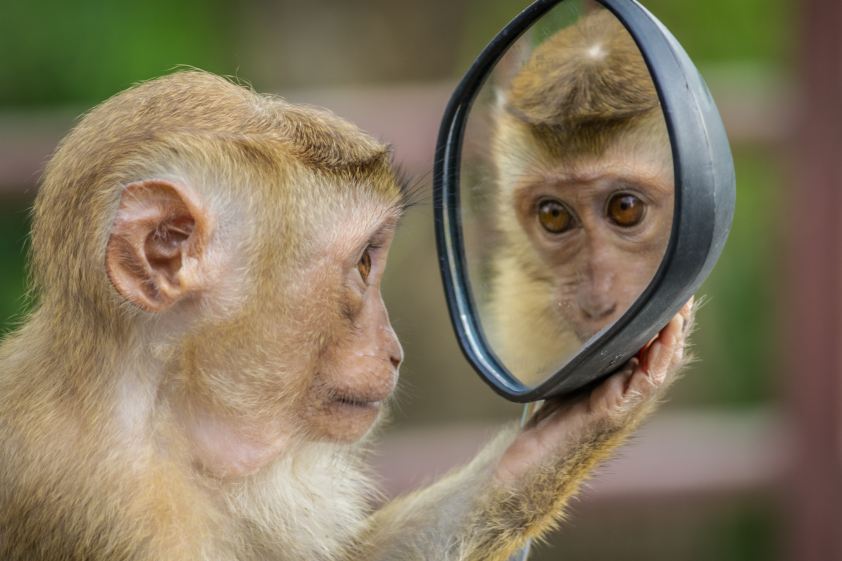
“Mirror, Mirror, on the Wall….”

I have had a couple different blogs about reflections recently. This time, I’m going a different direction with the word reflection. For some of you, a mirror may come to your mind when I say the word, and you may not like what you see in a mirror. Perhaps, it’s your physical appearance–too tall, too short, too fat, too skinny, too light, too dark, too many wrinkles, too bald, etc., or it may be a character flaw (what you know is on the inside) that you don’t like. It may be that you have an anger problem, or that you are too impatient, too hypocritical (or perhaps the opposite), too lazy (or just a lack of self-discipline to get necessary things done), too dishonest, too proud, too negative, or too much of a worrier. We’ll look at both kinds in this blog.

The first physical characteristic that I notice about myself when I look in the mirror these days is that my weight has been redistributed in my body. I’m still not very heavy (even close to the the same weight as I was in high school many years ago), but somehow it seems that my top keeps dropping to my bottom and thighs a little bit more each decade. And now, during this Covid-19 period of social distancing and quarantining, I have found that I have “bad hair” days frequently. I need a hair cut so badly to reshape what used to be a short style haircut.

Then, recently I have also seen someone in the mirror who has made too many excuses for my character flaws due to being raised (or in many ways, raising myself) in a very dysfunctional, single-parent home in the 60’s and 70’s. I don’t particularly like either of those reflections that I have been seeing. Well, should I just fret about the things that I don’t like about myself, or do something to try and change those things?

I believe that if you really want to change negative things about yourself and become more disciplined and Christ-like, God will help you. Philippians 4:13 says, “I can do all things through Christ who strengthens me”; Matthew 19:26 says that “with God all things are possible”; Matthew 7:7 says, “ask, and it shall be given unto you”; and Romans 7:24 reminds of how wretched we are in ourselves, but verse 25 says that victory comes through Jesus Christ our Lord. So, to change those things that you don’t like about yourself, start by talking to God about them, and ask Him to help you change them. Then, set goals, make a realistic schedule, find someone who will help keep you accountable, and finally, thank God for what He is going to do in and through you. Don’t let the enemy discourage you (or even make a monkey out of you). Although God sometimes does things supernaturally, He often uses the natural ways to teach and grow us, so it often takes time to get rid of those bad habits and to develop good habits for Him.

My plan of action is to get up a little earlier to start each morning with a longer quiet time  praying and reading the Bible (Romans 10:17 says “faith comes by hearing and hearing by the Word of God”), schedule in at least 2 forms of exercise daily (probably an aerobic and an anaerobic form), ask a family member to help keep me accountable, and to turn off (or walk away from) anything that distracts me from my goals. Then, of course, I’m going to thank and praise God for what He is doing in me.

Far Above Rubies

In the last chapter in the book of Proverbs, we have a description of what King Lemuel’s mother called “a virtuous woman”. Through the years that I have been a Christian, I have heard many women say that Proverbs 31 discourages them when they read it, because the woman described here seems too perfect and they could never live up to her example, or do all the things that it mentions; other women have just ignored this passage altogether, saying it is not relevant for today. However, since this chapter was included in the Bible, I trust there are some valuable principles that we can learn from it.

First, we can see that she is always faithful and kind to her husband; she also works very hard to help provide food for her family; she sacrificially serves her entire household, even missing some sleep to prepare nutritious food for them; she shows wisdom in her real estate and business dealings; she is physically strong; she grows some of her food, and makes some beautiful clothes for herself and her family; she sells some of them, and probably gives food and clothing to the poor and needy; she is not idle, gossipy, lazy, foolish, or unkind to others; she opens her mouth with wisdom; she is honored, praised, and blessed by her husband, children, and others; but most importantly, she is a woman who fears (honors, respects, and loves) the Lord.

None of that is unattainable for any woman. Even if its not natural or easy for us, there are many different ways to learn some of the skills that the virtuous woman possessed. Many of us were not raised that way in our home or our culture, but we can start with a desire and diligence, and then ask God to help us.

Do you want to be a woman who fears God and is honored by her husband and children, even if this means living a more modest and simple lifestyle; or do you want to wake up someday, and find your husband gone, your children grown (perhaps too busy to spend time with you in your later years), your physical beauty is gone, and all that you have is a big house, a large bank account, and lots of stuff, but you feel lonely and empty? Saddest of all, you may find that you have hardened your heart and have no desire for the things of God. Matthew 16:26, Mark 8:36, and Luke 9:25 all share the same message: What will it profit a person if he shall gain the whole world and lose his soul?

I encourage you to take a fresh look at this passage:

Proverbs 31:10-31
Who can find a virtuous woman?
 For her worth is far above rubies.

The heart of her husband safely trusts her;

So he will have no lack of gain.

She does him good and not evil
  all the days of her life.

She seeks wool and flax,
 and willingly works with her hands.

She is like the merchant ships,
 she brings her food from afar.

She also rises while it is yet night,
 and provides food for her household,

And a portion for her maidservants.

She considers a field and buys it;
 From her profits she plants a vineyard.

She girds herself with strength,
 and strengthens her arms.

She perceives that her merchandise is good,

And her lamp does not go out by night.

She stretches out her hands to the distaff, and her hand holds the spindle.

She extends her hand to the poor,
 yes, she reaches out her hands to the needy.

She is not afraid of snow for her household,
 for all her household is clothed with scarlet.

She makes tapestry for herself;
 her clothing is fine linen and purple.

Her husband is known in the gates,
 when he sits among the elders of the land.

She makes linen garments and sells them,
 and supplies sashes for the merchants.

Strength and honor are her clothing; She shall rejoice in time to come.

She opens her mouth with wisdom,
 and on her tongue is the law of kindness.

She watches over the ways of her household,
 and does not eat the bread of idleness.

Her children rise up and call her blessed;
 her husband also, and he praises her:

“Many daughters have done well,
 but you excel them all.”

Charm is deceitful and beauty is passing,

But a woman who fears the Lord, she shall be praised.

Give her of the fruit of her hands,
 and let her own works praise her in the gates.