The Millennial Reign of Jesus Christ

(The following excerpts are from the Book of Isaiah in the Old Testament)

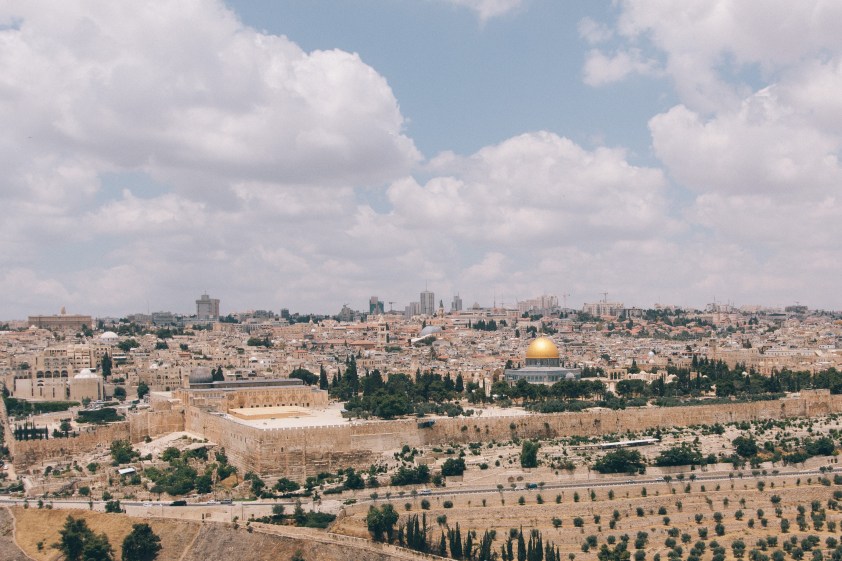
Isaiah 2:2-4 “And it shall come to pass in the last days, that the mountain of the Lord’s house shall be established in the top of the mountains and shall be exalted above the hills; and all nations shall flow unto it. And many people shall go and say, Come ye, and let us go up to the mountain of the Lord, to the house of the God of Jacob; and He will teach us of His ways, and we will walk in His paths: for out of Zion shall go forth the law, and the Word of the Lord from Jerusalem.

And He shall judge among the nations, and shall rebuke many people: and they shall beat their swords into plowshares, and their spears into pruninghooks: nation shall not lift up sword against nation, neither shall they learn war any more.”

two men in army uniforms with guns

Photo by Pixabay on Pexels.com

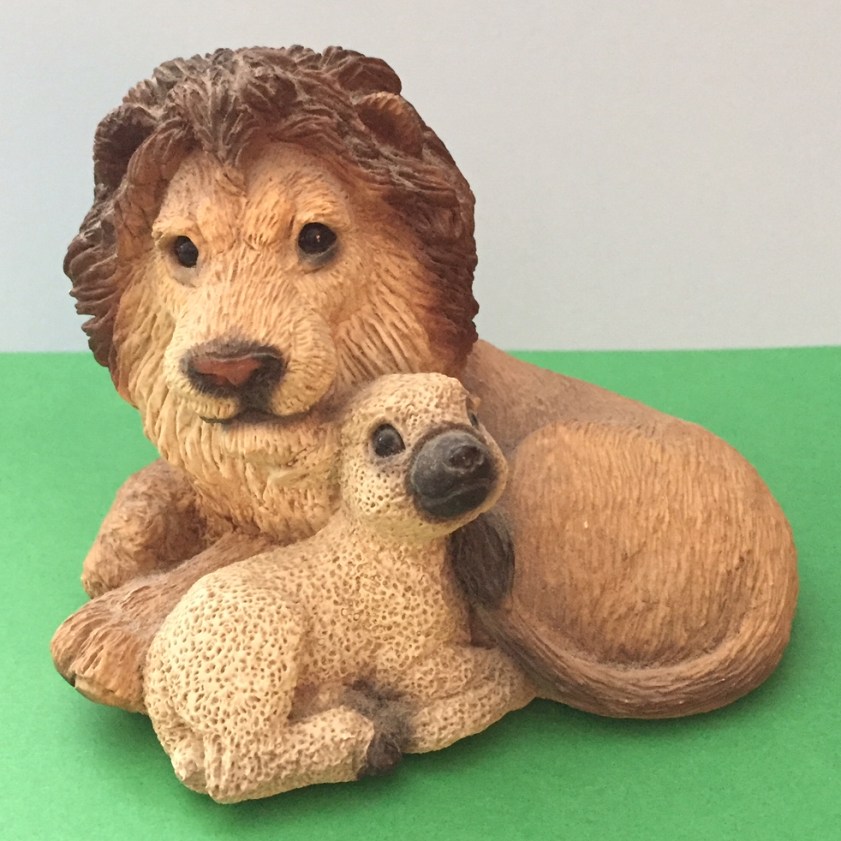
Isaiah 11:6-9 ”The wolf also shall dwell with the lamb, and the leopard shall lie down with the kid; and the calf and the young lion and the fatling together; and a little child shall lead them. And the cow and the bear shall graze (together); their young ones shall lie down together: and the lion shall eat straw like the ox. And the sucking (nursing) child shall play on the hole of the cobra, and the weaned child shall put his hand in the viper’s den.

IMG_1795

What’s In a Name? Part 1

Names have been in existence ever since God created humans. God gave Adam the first name, meaning “formed of the earth”. Names are an integral part of who we are. Although we are all unique anyway, names give us a tangible way to distinguish one another.

Not only are the names that we have now meaningful, but we are told in Revelation 2:17 that every believer is going to receive a new name that will be written in a white stone that no one will know except the one who receives it. This promise shows us just how loved and special we are to the God who created us.

Both religion and culture have influenced the meaning of names. In ancient times, people were generally given just one name, and it was often related to a circumstance surrounding the child’s birth (“Moses” means “drawn from the water”), or connected with a promise (“Isaac” means “laughter”, because Abraham and Sarah found joy and laughter when they had a son in their old age). Later in history, second names were given to demonstrate a person’s identification with a particular family or clan (Gaius Julius Caesar), or even with a father (“Simon bar-Jonah” means “the son of Jonah”).

Around 1100 AD, additional names became more common in Western Civilization. These surnames were originally for the noble class (thus, “sir” names), but in 1465 King Edward V of England required that surnames be adopted by everybody for identification purposes. These were to reflect a person’s identity in some way. They often represented their work (Miller, Baker). Other names were even formed by adding “son” to the father’s name (Johnson, Anderson).

Middle names were not used until the 18th century, and these were added to further distinguish a person or as a way of honoring deceased persons. These have become more important as the population has continued to grow.

In modern days, the names of children are often selected on the basis of familiarity and popularity. However, some parents still name their children after some specific characteristic or place, or to commemorate someone or something.

Generally, names are still chosen on the merits of their positive implications with the expectation and hope that the child will exhibit that quality (Cady means “pure”). Christian parents often look in the Bible for names that will seemingly fit the goals that they have for the child or for the circumstances related to the child (Matthew means “a gift from God”, Samuel means “God has heard”, and Joshua means “God is my Salvation”).

Names are wonderful gifts! They are “a celebration not only of our humanity, but also a reminder of our individuality- that we are uniquely made in the image of God” (The Name Book by Dorothy Astonia, page 9).

Happy Mother’s Day!

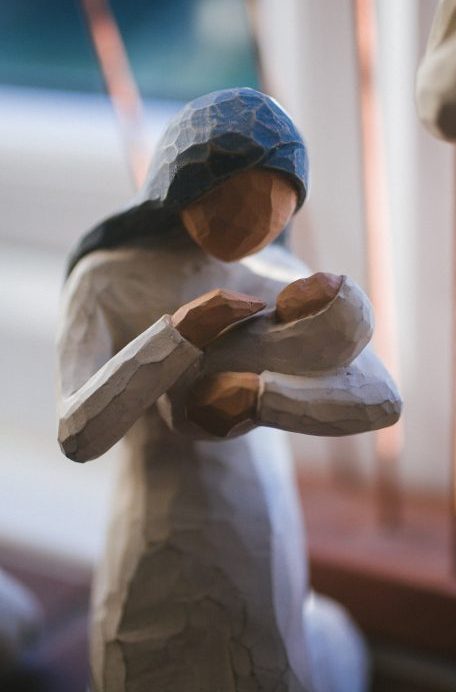
May 10th is Mother’s Day here in the USA. This is a special day to honor the woman who carried you in her womb for 9 months, brought you into this world, and most assuredly, gave of herself sacrificially for you for at least some of your life, even if your family situation was far from ideal.

First, I want to mention two very special mothers in the Bible, who gave sacrificially to their children, and how they dedicated them to the Lord. In Exodus, chapters 1 and 2, we read how the family of baby Moses risked their lives to save him, even after the Pharaoh of Egypt commanded that every baby boy was to be killed during birth, or to be cast into the river after he was  born. Moses ended up being the leader that brought the Israelites out of Egypt, through the wilderness, and to the Promised Land.

Then, in 1 Samuel 1 and 2, we read about Hannah, who had been barren (and provoked by another woman, because she was unable to have a child). Here are some facts about Hannah that ended up making her an ideal mother when she finally did have a son. She realized that being a mother was a beautiful, lofty calling, so she prayed fervently and persistently that God would bless her with a child. She promised God that she would dedicate and give this child to the Lord; She gave her son, Samuel, lots of time, training him in the ways of the Lord;  Then, she kept her promise to God, and I’m sure her prayers followed him throughout his life. At a time in Israel when no one was hearing from God because of rampant sin, God used Samuel as a prophet to bring His message to the people.

Well, the circumstances in my life weren’t as ideal as the above ones, and my siblings and I didn’t often get the time and attention that we needed; but in spite of the many hardships my mother faced in life, she truly was an exceptional mother in many ways, and deserves admiration and respect. I didn’t understand and appreciate how remarkable she was until I got to know her better shortly before she passed away by caring for her and reading her poetry that she had written through her difficult years, but by then it was almost too late. So, I really do love her dearly and wish I could give her a hug, and tell her that, as I wish her a “Happy Mother’s Day!”