
If you regard animals as “thinking or feeling” similarly to the way a person does, then you are guilty of anthropomorphism. Although animals may show fear, anger, and pleasure, it is difficult for humans to tell how much of their behavior is actually from instinct and how much is reflex. Animals do not feel emotions in the same way that man does, but because our world is seen from a human perspective, it may be hard to resist being anthropomorphistic. Saying that a bird “sings” to keep intruders from its territory, and saying that some animals hide under bushes when they are “afraid” of a predator such as a hawk, are examples of anthropomorphism.
Many animals are quite intelligent. Many invertebrate animals behave mostly by reflexes and instincts, and some vertebrate animals have more complex brains and are capable of learning. However, a vast gap still exists between human behavior and the most intelligent animals.


Some significant differences between human and animal behavior are as follows:
- Humans are capable of appreciating beauty such as music and art, but animals show no evidence of having this aesthetic sense.
- Humans have a complex language that expresses many ideas. Animal language consists of mating calls, warning notes, etc., but they do not use their “words” as symbols of ideas.
- Humans must learn skills; animals behave by instinct. For example, a person must learn some carpentry in order to build a house, whereas birds and wasps build their homes by instinct.
- Humans have a reasoning ability that is unmatched by any animal.
- Humans accumulate knowledge with each generation, building on the accumulated knowledge of previous generations; but animals just continue to behave as their ancestors did. For example, a mother dog can learn many tricks, but she does not pass any of her knowledge on to her puppies.
- Humans have the ability to love (or hate) other people in manners unmatched by animals. Human mothers generally love their children throughout their lives; but mother animals protect their young until they are able to care for themselves. After that, she gives them no further attention.
- Most importantly, humankind has a moral sense of right and wrong. Animals are considered amoral, neither moral nor immoral. So, where does this sense of morality come from? We must look into the Word of God to answer this question.
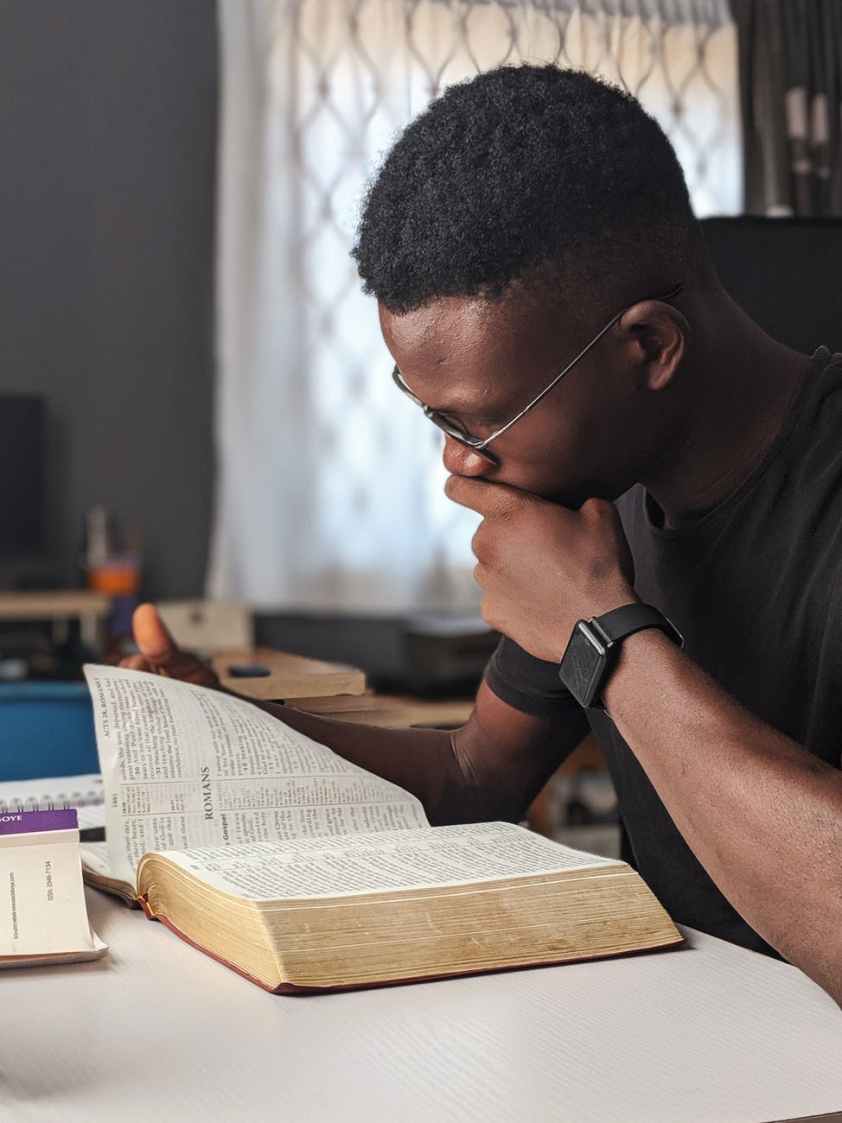
Photo by Oladimeji Ajegbile on Pexels.com
Genesis, the first book of the Bible, gives us the account of creation. We read that God created the world and all that is in it in six days, and then rested on the seventh day. Genesis 1:26-31 gives the account of the creation of man. We see that man was created separately from the animals on the sixth day of creation, and was the “grand climax” of all that God has accomplished during His creation week of miracles. Genesis 2:9 says that God formed man’s body from the dust of the ground, and then breathed into his nostrils the breath of life, and “man became a living soul.”
Although Genesis 3:1-24 gives the account of the “fall of man” and the “curse”, humans still retain the image of God that was bestowed upon them at the time of creation. James 3:9 reminds us that we are “made after the similitude (likeness) of God.” We recognize that only humankind has the capacity to choose the free gift of eternal life that God offers. Moral discernment, self-consciousness, fellowship with God and man, and the practice of worship are all possible because we are made in the image of God.
Humans are the only creature that was made in the image of God, so we can rejoice with the writer of Psalm 139:14-17 when he says, “I will praise you; for I am fearfully and wonderfully made; marvelous are your works, and that my soul knows very well. My substance was not hid from you when I was made in secret, and skillfully wrought in the lowest parts of the earth. Your eyes did see my substance, yet being unformed; and in your book all my members were written, which in continuance were fashioned, when as yet there was none of them. How precious are your thoughts unto me, O God! How great is the sum of them!” (These verses make it very clear that we are not just fetal tissue when in our mother’s womb).


I’d like to use a short passage from “The Mystery of Memory” by Alfred M. Rebwinkel as a summary. “Man was created a rational being, endowed with intelligence. This means that man was endowed with the faculty of reason and the ability to learn. Man is not like the animal, limited by instinct to a fixed pattern of life; he can benefit by past experience and direct his course of action accordingly. He is free to select a course of action, weigh the consequences of his choice, and act accordingly….” I pray that each of you who read this blog post would use your free will, and choose to make Jesus Christ the Lord of your life, and then walk in this “newness of life” (see Romans 6).
 Transformed ♥ Heart